



Positive Client Reviews

The training begins with the emphasis on clear, organised thinking. The work focuses on structuring ideas, developing coherence, and expressing complex concepts with precision in professional contexts.
- Logical Structure
- Coherent Argumentation
- Precision of Expression
All development is grounded in authentic professional situations, including discussions, written communication, and decision-making exchanges, ensuring direct relevance to your daily work.
- Authentic Professional Contexts
- Task-Based Communication
- Direct Workplace Relevance
Progress is documented through a structured portfolio of communication tasks, providing clear evidence of development and enabling consistent refinement over time.
- Evidence-Based Progress
- Documented Communication Tasks
- Cumulative Development
Detailed, targeted feedback supports ongoing improvement in clarity, structure, and effectiveness, ensuring that communication develops as a reliable professional capability.
- Targeted Performance Feedback
- Ongoing Communication Analysis
- Iterative Improvement
The process addresses hesitation, confidence, and internal barriers, supporting communication that reflects both competence and professional presence.
- Confidence through Competence
- Awareness of Communication Patterns
- Reduction of Hesitation



What Distinguishes This Approach.
Communication as Professional Competence
English is developed not as a subject, but as a medium for thinking, decision-making, and professional action, enabling clear, structured, and authoritative participation in complex international environments.
Integration of Thinking, Language, and Confidence
The approach combines structured thinking, linguistic precision, and psychological awareness to reduce the gap between expertise and expression, building communication that is both accurate and confidently delivered.
Individual, Depth-Oriented Development
A one-to-one, structured process focused on real professional tasks, where progress is defined by demonstrated communicative ability rather than completed lessons or general language progression.
The Thinking Behind the Approach.
Mission
To provide depth-oriented, one-to-one language training that supports clear thinking, strengthens professional identity, and enables effective communication in complex, high-stakes environments.
Vision
To contribute to a professional environment in which language development serves as a pathway to clearer thinking, stronger professional identity, and responsible participation in complex contexts.
Clients from World-Recognized Organizations










Success Stories Encourage Others to Grow.
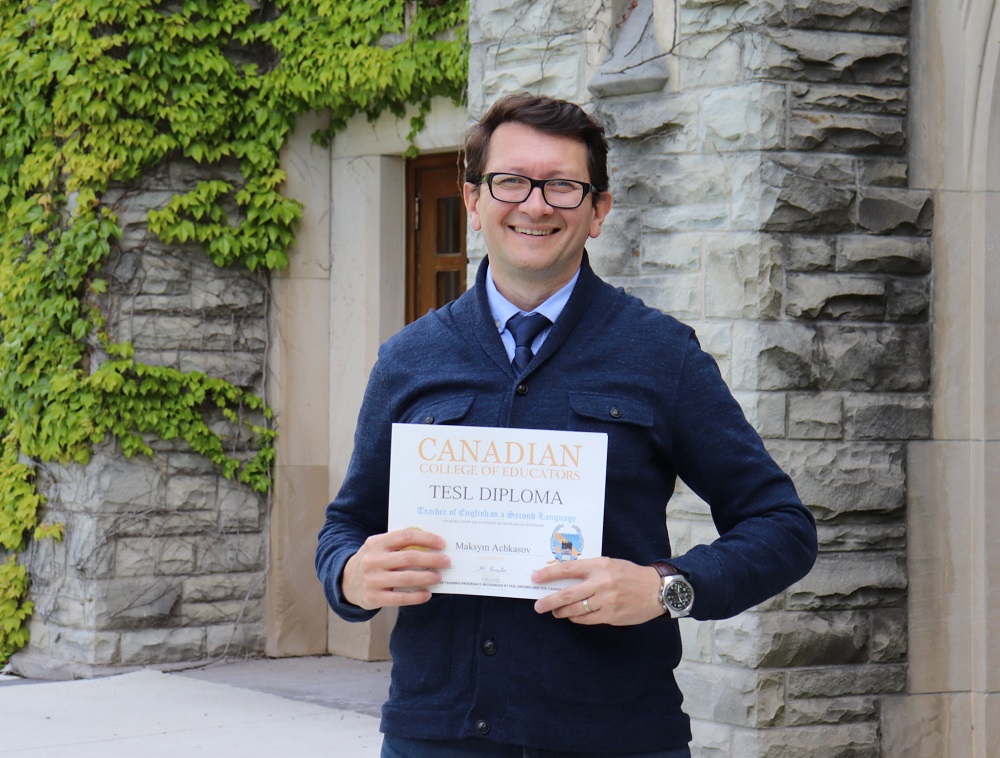
Maksym helped me prepare successfully for admission to a master’s degree programme through structured speaking practice, interview preparation, and communication strategies.

Lessons helped me organise my thoughts more clearly and communicate more confidently during international meetings.

I stopped being afraid of speaking English and started genuinely enjoying the learning process.

These lessons made a significant contribution to the success of my IELTS preparation. I passed the test with an overall score of 8.

Maksym creates a learning atmosphere where people begin to think, speak, and express themselves more freely.

Maksym was able to eliminate most of my psychological obstacles to learning English. I finally began speaking without a sense of inconvenience.


What We Focus On
Some of the key themes covered during the training
We learn how to participate actively and effectively during meetings; how to participate in discussions, express and defend our opinions, agree and disagree tactfully and respectfully, clarify ideas and manage interruptions appropriately. We focus on how to develop the confidence and to lead conversations, and finally summarise key decisions.
Successful negotiations require more than just the right vocabulary and grammar. Therefore, we learn how to make proposals, handle objections, suggest compromises and use persuasive yet diplomatic language while maintaining positive, respectful and productive professional relationships.
Here we focus on telephone calls, video meetings, spontaneous workplace conversations, trying to develop the ability to communicate clearly and confidently. We practise building genuine relationships, handling difficult conversations and responding effectively when communication becomes challenging or unpredictable.
Effective communication in email and official letters requires precision and an awareness of appropriate and relevant tone. Therefore, here we learn to write effective and tactful professional correspondence, formulate requests and responses, manage follow-ups and complaints, and most importantly communicate clearly and persuasively within different professional contexts.
We learn how to structure presentations logically and cohesively, explain complex ideas clearly and guide our audience through our key message. We also learn how to develop techniques for effective signposting, engaging storytelling, presenting visual data and handling questions with confidence and care to the audience.
Working internationally often requires sensitivity to different cultural norms, various expectations, and communication preferences. Thus, we learn to develop greater awareness of cultural differences, distinctions in directness and politeness, attitudes to timing, authority, and teamwork. We learn how to prevent and deal with misunderstandings and how to build rapport with colleagues and partners from diverse backgrounds.
Some of the most important business conversations happen outside the meeting room. Whether sharing a coffee, having dinner with a client at a restaurant or travelling with international colleagues, informal conversations provide opportunities to build rapport and establish genuine lasting connections. Here we focus on developing the confidence to move beyond work-related topics and communicate naturally about national food, preferred travel, culture particularities, hobbies, interests and basic everyday-life things.
How to Apply for the Programme.
Submit a Request
Provide brief information about your professional context, communication needs, and goals to initiate the process.
Attend a Consultation
We meet for a consultation and diagnostic assessment session to evaluate your English proficiency and communication, clarify objectives, and establish an appropriate structure for development.
Confirm and Begin
Following the consultation, the programme is confirmed, an initial set of sessions is scheduled in advance, the agreement is signed, and the first block of sessions is arranged, after which one-to-one training begins.
Request Initial Consultation
Our Pricing Plan.
Basic Plan
Practice-Oriented Communication
- One-to-one sessions focused on real communication practice
- Development of clarity and accuracy in speaking and writing
- Targeted feedback on language and communicative effectiveness
- Individually adapted materials aligned with your professional context
- Access to structured learning environment and task-based activities
Standard Plan
Portfolio-Based Communication Development
- One-to-one sessions within a structured development process
- Systematic progression across four areas of communication
- Portfolio-based system documenting communication performance
- Detailed feedback on clarity, structure, and communicative impact
- Access to platform, tailored materials, and unit-based assessment
Premium Plan
High-Stakes and Executive Communication
- One-to-one sessions focused on complex professional situations
- Advanced development of argument structure and communication strategy
- In-depth feedback on clarity, precision, and professional presence
- Portfolio-based tracking with extended analysis and refinement
- Fully individualised work aligned with high-stakes communication demands
Feel Free to Get in Touch